
Family Context
Johnathan Moore grew up in a household where Diabetes was a visible, daily routine but not a topic of discussion. Johnathan watched his father, a Type-1 diabetic, take his insulin shot every morning. Johnathan’s stepmother was navigating her own health challenges: her experience as a breast cancer survivor and Type-2 diabetic added another layer to the family’s collective awareness of illness. Yet despite the history and proximity of diabetes in his family, the practicalities—the why, the what, the how, the long-term implications—remained unspoken.
Johnathan’s first real exposure to the mechanics of diabetes came early, around age 13 or 14. He didn’t understand why his father had him pee on a strip then hold it up to a color chart to gauge his blood sugar. Unbeknownst to him at the time, this routine planted the seeds of a future struggle, even as his daily life continued with the same rhythm as his peers for the next 20 years.

Turning Point
The turning point—the moment when diabetes ceased to be a “dad thing” and became a personal reckoning—arrived in his mid 30’s. Johnathan found himself losing a lot of weight, looking jaundice, his vision so impaired that he couldn’t discern objects eight to ten feet away. A colleague’s casual suspicion— “man, you might be diabetic”—was met with denial: “Man, get out of here. I’m not diabetic—that’s my dad’s thing, not mine,” Johnathan said. Johnathan soon scheduled an appointment with his doctor, who ran several tests.
A few days later, he receives a call with urgent gravity: “I need to see you immediately”, the doctor said. In that moment my mind raced through my sex history, “Who did I sleep with?” “What do I have?”. Back then, hearing a doctor say you must come in right away often carried the implication of either AIDS or an STD.
I returned to the doctor, my mind racing with worst-case scenarios, I was braced for bad news. Then he spoke to me, calm and direct: “I have some news for you. “Your blood sugar is above 800. You have Type-1 Diabetes”. I felt a small, uneasy relief as the news landed: I was diabetic. “Okay, cool—what’s that?”, I ask. Years of hearing the word and seeing my father downstairs with his coffee taking a needle and sticking it in his body, and stepmother sticking her finger with a needle was their thing.
“Your blood sugar is so high it’s beginning to clog your arteries,” he explained. He said it’s rare to be diagnosed in your mid-30s, but the reality was suddenly undeniable, immediate, and mine. After the diagnosis, Jonathan returned to work and told his employer he needed time off to adjust to this new reality. The first steps were clear: begin insulin therapy, monitor blood sugar, and confront the fear of needles.
Early Medical Encounters
Johnathan’s early years living with diabetes were marred by an uneasy mix of information gaps and perfunctory medical care. He recalls a pompous and dismissive endocrinologist who offered little beyond a five- to ten-minute consultation, wrote a prescription, and sent him on his way.
A glimmer of community arrived in an unexpected encounter when he moved in West Virginia. There he met a cashier at the grocery store where he purchased his fruits and vegetables. She was also diabetic. She began to educate him about diabetes and which fruits to eat based on the season. A chance encounter with someone I met on a farm; not a doctor, not nurse, not diabetic educator, a cashier taught me how to live and prosper with my illness.

Stuck in the Middle
Eventually I moved back to Baltimore and got a divorce. I lost my insurance, I lost everything. When you’re an entrepreneur and dedicated to your business and still trying to grow it, everything is on the line. I still needed the insulin, but with no insurance it was impossible until I was in Walmart one day. I overheard a women talk about diabetes medication for her dog for $25. So, I start buying my insulin for $25 from Walmart.
I soon got back on my feet but was diagnosed with Diabetic Ketoacidosis (DKA). My blood sugar was somewhere around 850. My blood sugar was so high that the liquid in my body started turning to acid. It ate a hole in my body, right above my rectum and I had to have surgery.
After surgery they told me about a free resource where I could get FREE insulin, a diabetes educator and endocrinologist at University of Maryland. Unfortunately, you qualify for the program for 1.5 years, then must reapply. I was stuck in the middle. I made too much money to qualify, but not enough to afford insurance.
After losing insurance for the second time, I started to really research diabetes and uncovered a world I didn’t know existed. When I was able to go to the clinic and get insulin, they would always tell me that the Walmart insulin is not good for you. But it’s what I could afford. Its social economics.

Amputation and the Crumbling of My World
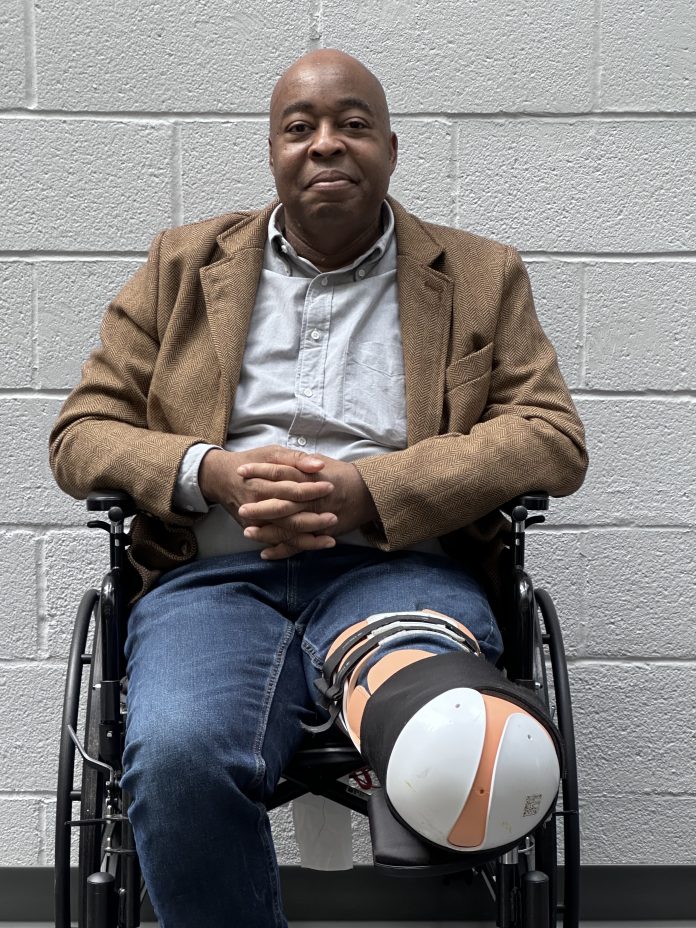
In 2021, I was diagnosed with Charcot, —an extremely rare complication for insulin-dependent diabetics— It only happens to 1 percent of diabetics, and I am in the 1 percent. The bones in my right foot melted, it smelled like water in a dumpster that had been there for 3 weeks. They prescribed two antibiotics every four hours 24/7 for 3.5 months. It took me 9 months to recover. So that’s nine months not working. I got better but in 2022 it happened again. Again, over 9 months I endured aggressive antibiotics around the clock, missing work, and wrestling with debt as I fought to recover. The following year brought more infections and recurring surgeries.
In 2023 they shaved down the bone in my foot, then in 2024 it happened again on my toes. I was thinking if this happens again, I’m just going to get it amputated. I began studying prosthetics and life as an amputee. At this point, I was tired of being in the hospital every year for 2 weeks, not working for 9 months, and trying to make up the difference in 3 months and I not being able to pay my rent.
For years it was another hospital visit, diagnosis, and surgery. In 2023 and 2024 I endured repeated complications that pushed me to confront life as an amputee. I studied prosthetics and imagined what life could be like as an amputee, tired of hospital stays and the fear of losing my ability to pay rent.
By late 2024, swelling in my limbs had become three times their normal size, a stark reminder that the struggle with diabetes is not a single battle but a continual war fought on many fronts—medical, financial, and emotional. On vacation I developed a blister on my left foot and, once again, ended up in the hospital with the same three infections. They told me I might need a partial amputation of my toes.
We debated the option, and I spent two weeks in the hospital each day they removed a toe—the final one being my big toe. I went home feeling some relief, only to start fainting again as the infection moved through my body and I began to struggle to breathe. The other consequence of diabetes is congestive heart failure—each setback wearing me down until the thought of not wanting to live crept in.
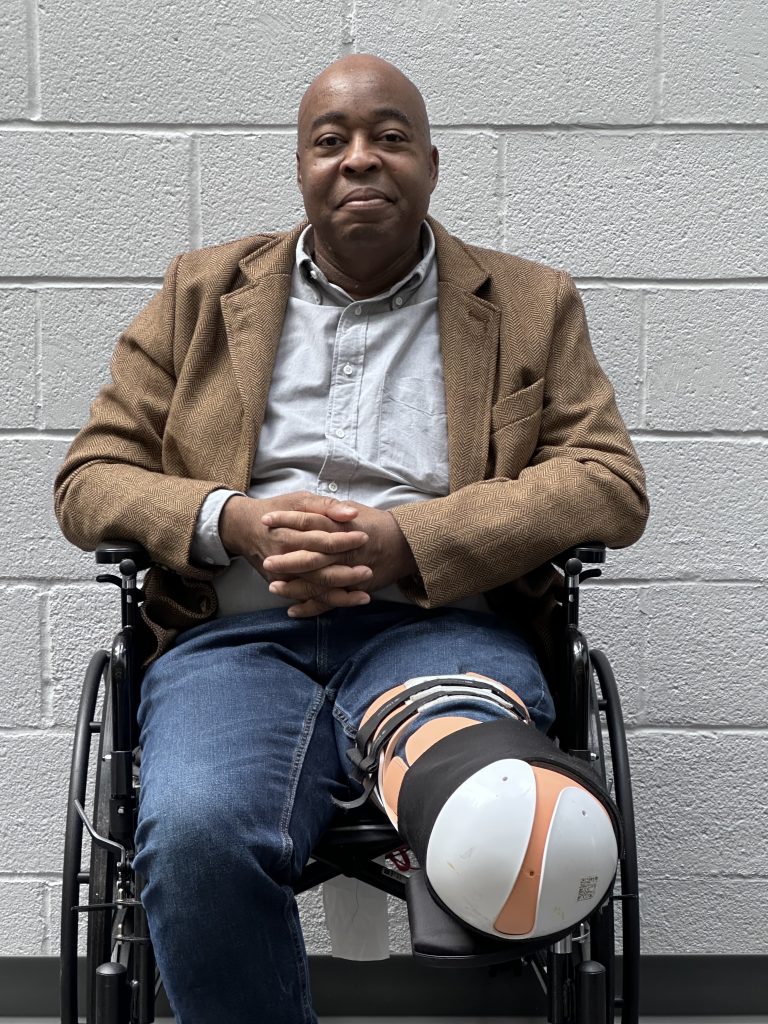
After the surgery, seven doctors crowded into the room, delivering a stark warning: if we don’t amputate your foot, you could die. I broke down in tears, then said let’s proceed with the amputation. Hours after the amputation, a surge of energy washed over me—the clearest mind I’d had in years. My speech slowed to normal, my thoughts precise, and an adrenaline rush that felt almost unreal. Friends who visited expected exhaustion, not the clarity I showed.
I understood then that something essential had been pulled away, only to be replaced by a gift I would uncover over time: a renewed sense of purpose. I woke in the darkest hours with a realization: there is a reason to rise each day, a reason to live, and a reason to look inward at the gift shaping my future.
That day, I decided to make a positive choice. I woke up in the middle of the night, and said, “Jesus Christ took something away from me in order to give me a gift and it’s a gift I would unwrap over a long period of time before it reveals itself”. There is a reason for me to get up. There is a reason for me to find my purpose. There is a reason for me to live because I need to see inside this gift.

From Pain to Purpose
Diabetes redefined not only how he lived but why he lived, turning shock into purpose and isolation into community. His path became a public mission: educate others about diabetes, strengthen patient–doctor collaboration, and foster a supportive network where experiences are shared and valued.
Ultimately, this story reframes adversity as a catalyst for connection and advocacy. It invites readers to see how reframing personal health crises can spark collective strength, education, access, and care that honor humanity.
The journey from darkness to purpose endures not as a final milestone but as a continuous, hopeful pursuit—where knowledge, community, and empathy light the way for others navigating the night.