
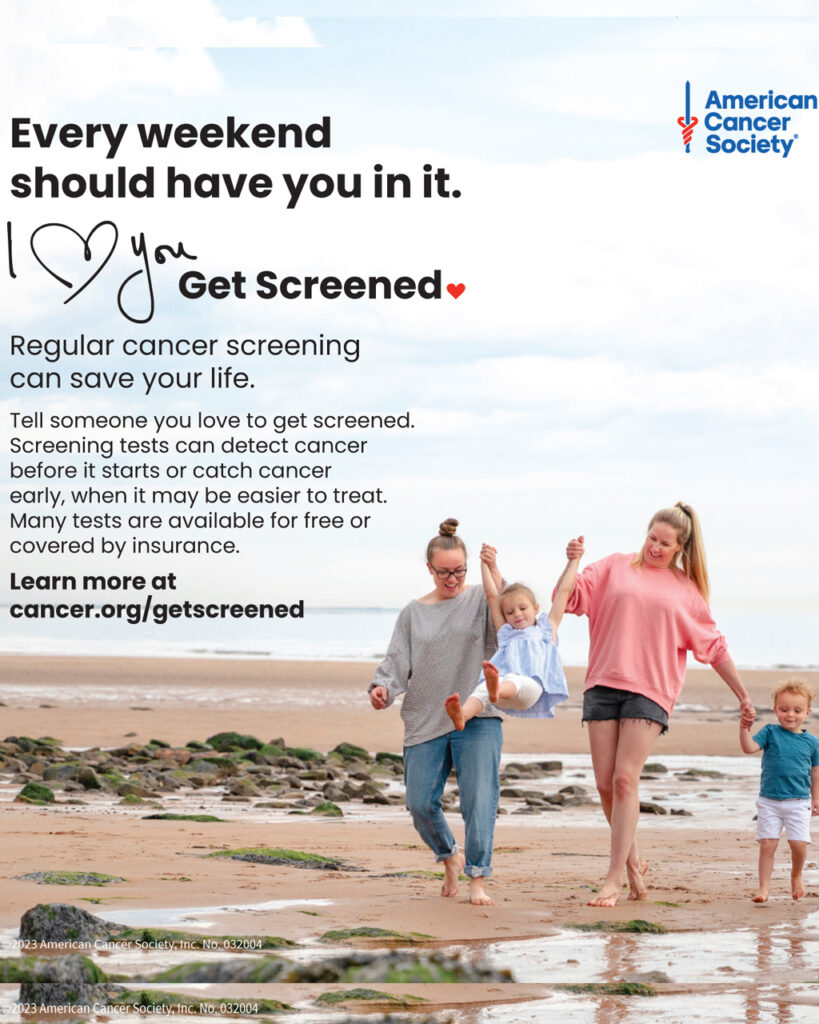
I Love You Get Scanned
A Message from the American Cancer Society
to Help Prevent Cancers at their Most Treatable Stages
NEARLY HALF OF ALL DIAGNOSED CANCERS IN THE U.S. HAVE A RECOMMENDED SCREENING TEST TO CATCH THEM EARLY. AND WHEN CAUGHT EARLY, CURE RATES CAN SURPASS 90%,” SAYS AMERICAN CANCER SOCIETY CHIEF PATIENT OFFICER ARIF KAMAL, M.D.

Screening tests are used before a person has any symptoms to help find cancer early, when it may be easier to treat.
The American Cancer Society is making a big push to reduce the screening gaps in the U.S., which became greater than ever during the pandemic. Millions of Americans miss their cancer screenings due to the COVID-19 outbreak, according to a study led by the American Cancer Society and published in the Journal of the American Medical Association in February 2023.
«The COVID-19 pandemic continues to have a detrimental effect on important cancer screenings in this country,» says Jessica Starr, associate scientist, cancer risk factors and screening surveillance research at the American Cancer Society and lead author of the study. “It’s critical to get people back into their doctor’s offices to help prevent and catch cancer at its earliest stages when it might be easiest to treat.”
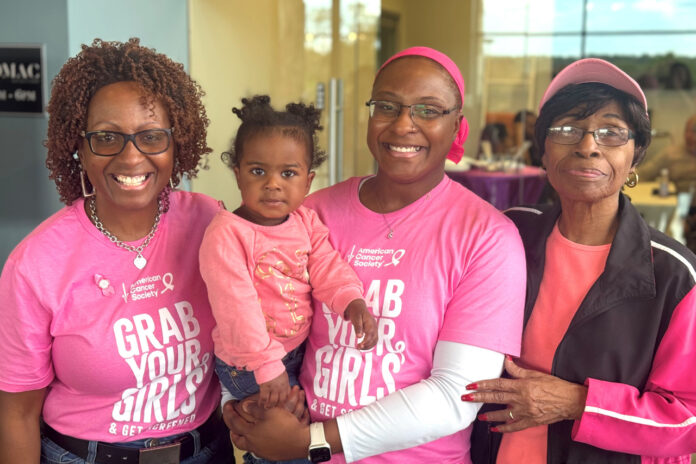
To address this, the American Cancer Society launched a national campaign called, «I Love You – Get Screened.» It includes some specific calls to action, such as the “Grab Your Girls” breast cancer screening message, which is emphasized during Breast Cancer Awareness Month, October. Grab Your Girls encourages women to hold each other accountable to get their mammograms by grabbing their female family and friends and urging them to get screened.
An example is Washington, D.C., area resident Madeline Long, a breast cancer survivor who volunteered to be a Faces of Hope ambassador representing the American Cancer Society Grab Your Girls campaign. In 2011, screening saved a trio of women in her family – including herself. Long had a lifesaving mammogram thanks to the urging of her mother who had just been diagnosed with breast cancer. Madeline’s mother got her mammogram because her sister was diagnosed during her regular annual mammogram. All three women were diagnosed within weeks of each other. This is the kind of screening encouragement that Grab Your Girls wants to inspire.
Breast cancer death rates have dropped by 43% since the early 1990s because of “better drugs, more research, and more women getting screened. Screenings actually work,” says American Cancer Society Chief Medical Officer William Dahut, M.D. “We encourage every woman to begin talking to their physicians at age 40 about screenings and by age 45 have a screening annually.”
Colorectal cancer is another cancer for which screening is particularly effective in saving lives. According to cancer.org: “Colorectal cancer is one of the most common types of cancer and is a leading cause of cancer-related deaths in the U.S. If all adults 45 and older were screened for colorectal cancer, we could avoid thousands of deaths each year and prevent many people from ever getting the disease.”
Screening can often find colorectal cancer early, when it’s small, hasn’t spread, and might be easier to treat. A polyp can take as many as 10 to 15 years to develop into cancer. With screening, doctors can find and remove polyps before they have the chance to turn into cancer.
“Further, the American Cancer Society created the first cancer screening information and location tool at www.cancer.org/get-screened, where users can put in their zip code and find local resources,” says Dr. Kamal. “Coupled with our health insurance specialists at our free 1-800-227-2345 line, we hope that questions of «how will it be paid for?» and «where do I get screening?» are answered quickly.”
In addition, The American Cancer Society, NFL and Sleep Number have come together to create The Defender Tool which puts into one place a cancer screening quiz and location database. By going to crucialcatch.cancer.org, individuals can take a short quiz to find out what screening tests are right for them, then answer a quick lifestyle assessment to see how their life choices can affect their cancer risk.
Cancer Screening Recommendations
Here are the American Cancer Society’s screening recommendations for people of average risk for certain cancers. Talk to a doctor about which tests you might need and the screening schedule that’s right for you. It’s also a good idea to talk about risk factors, such as lifestyle behaviors and family history that may put you or your loved one at higher risk.
Age 25–39 Screening recommendations
- Cervical cancer screening recommended for people with a cervix beginning at age 25.
Age 40–49 Screening recommendations
- Breast cancer screening recommended beginning at age 45, with the option to begin at age 40.
- Cervical cancer screening recommended for people with a cervix.
- Colorectal cancer screening recommended for everyone beginning at age 45.
- At age 45, African Americans should discuss prostate cancer screening with a doctor.
Age 50+ Screening recommendations
- Breast cancer screening recommended.
- Cervical cancer screening recommended.
- Colorectal cancer screening recommended.
- People ages 50-80 who currently smoke or formerly smoked and have a 20-year or greater pack history should have an annual lung cancer screening.
- Discussing prostate cancer screening with a doctor recommended.
For more information, go to www.cancer.org or call the free 24/7 American Cancer Society cancer information hotline at 800-227-2345 to speak with a trained cancer information specialist.