



Evolution is a gradual process of change and growth. Similarly, our journey to better health unfolds step by step—moving from habits that hold us back toward becoming healthier, stronger versions of ourselves.
It’s easy to fall into familiar routines that aren’t good for us: skipping workouts, reaching for fast food, spending too much time sitting, or neglecting our mental well-being. These behaviors offer convenience and comfort, but they can slowly erode our energy, confidence, and long-term health. And when the need for change becomes undeniable, the path forward can feel overwhelming. The first step is often the hardest.
But just like evolution, transformation doesn’t happen overnight. It’s not about sudden leaps, but about small, intentional steps—one choice at a time.
The Starting Point – Comfort in Unhealthy Choices
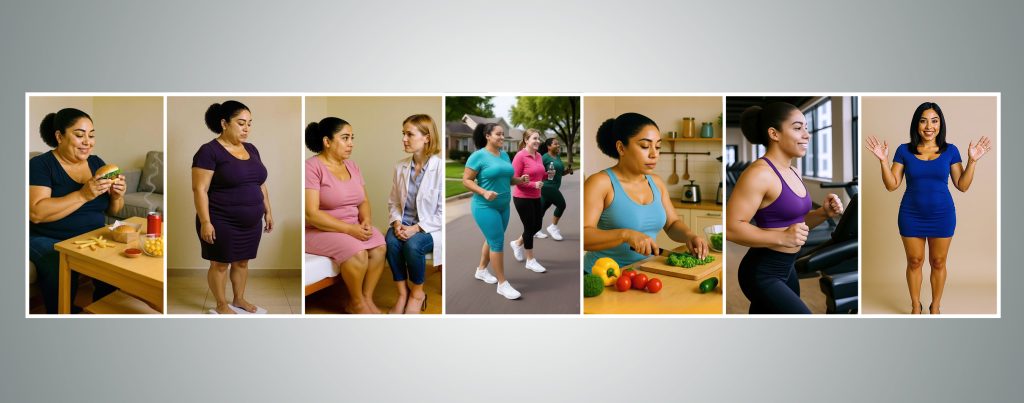
For many, the wellness journey begins in a place of unhealthy comfort—defined by habits that offer short-term satisfaction but long-term harm. Picture a woman sitting on the couch, eating fast food, and smoking. These choices may provide emotional relief after a hard day or serve as coping mechanisms during stress. But over time, they take a toll.

Habits like overeating, lack of exercise, poor nutrition, and smoking are deeply ingrained for millions of Americans. They’re often tied to routine, culture, stress, or emotional pain—and they can be incredibly difficult to break. Beneath the surface, there may be frustration, guilt, or even fear—but also a sense of being stuck.
The reality is that millions of people in Maryland and across the U.S. face similar challenges. According to the Centers for Disease Control and Prevention (CDC), more than 30 percent of adults in Maryland are obese—a condition closely linked to poor diet and inactivity. Additionally, smoking rates remain a serious health risk, with many struggling to quit despite knowing the dangers.
Obesity and unhealthy eating habits can also increase the risk of several cancers, including colorectal, breast, and pancreatic, by fueling chronic inflammation and hormonal imbalances that promote tumor growth.
Often, it takes a tipping point—a jarring, deeply personal moment—to shake us from the comfort of unhealthy habits. It might be the subtle humiliation of squeezing into an airplane seat or being required to buy two seats. Maybe it’s the frustration of gasping for breath after just a few minutes of playing with your kids. For some, it’s the sharp sting of a doctor’s words during a routine checkup— “Your blood pressure is dangerously high” or “You’re at serious risk for diabetes.”
In that moment, denial shatters, revealing that small indulgences have become harmful patterns. It’s uncomfortable, even painful—but it can ignite the powerful realization that change isn’t just possible, it’s essential.
Awareness & Reflection
Change begins with awareness. For many, this comes in the form of a jarring realization—stepping on a scale and seeing a number you don’t recognize, gasping for air after climbing stairs, or receiving tough news from your doctor.
These “aha moments” can bring a mix of emotions: shock, sadness, disappointment, even shame. But within that emotional wave is also a glimmer of something essential—motivation. A willingness to face reality and begin again.
Awareness is more than noticing something is wrong. It’s a shift in mindset—an honest confrontation with your current state of health. It’s admitting the way things can’t continue the way they are. Self-awareness is a key driver of successful behavior change. Those who actively reflect on their habits are more likely to take actionable steps toward better health.
This phase can feel uncomfortable, but it’s also full of potential. Awareness cracks open the door to transformation—and from there, the path begins to take shape.
Seeking Professional Guidance
After that first wave of reflection, many find themselves asking: Now what? This is where professional guidance becomes essential. Meeting with a doctor, dietitian, health coach, or therapist provides not only validation but clarity—a roadmap toward meaningful change.
Discussing personal struggles with a healthcare provider can feel vulnerable. It might mean disclosing things you’ve kept private for years. But vulnerability often leads to empowerment. A good provider listens without judgment and offers strategies tailored to your goals, medical needs, and lifestyle.
Preventive care plays a key role here. According to the National Library of Medicine, regular screenings and early interventions significantly reduce the risk of chronic diseases like diabetes, heart disease, and certain cancers. Yet millions delay these appointments out of fear, stigma, or misunderstanding.
Seeking help isn’t a sign of weakness—it’s a powerful act of self-care. With expert support, the impossible becomes manageable. You no longer have to guess what’s best for your body; you have a guide.
Building a Support System
While the journey is personal, it doesn’t have to be lonely. Surrounding yourself with people who support your goals—whether friends, family, coworkers, or a community group—can make a huge difference in your long-term success.
Support systems offer more than encouragement; they create accountability. Whether it’s walking regularly with a neighbor, checking in with a friend about meal planning, or joining a group fitness class, connection fosters commitment. Emotional support matters, too—especially on days when motivation runs low or when you hit a setback.
Wellness doesn’t require perfection—but it thrives in community. The people around you can help remind you of your “why” when you start to forget it yourself.
Incorporating Physical Activity
Once the foundation is set, movement becomes a critical pillar. Incorporating physical activity isn’t just about burning calories—it’s about reclaiming your energy, strengthening your heart, and learning to trust your body and mind again.
For beginners, this step can be intimidating. Sore muscles, unfamiliar routines, and self-doubt are common. But every workout, no matter how small, builds momentum. As the American Heart Association recommends, just 150 minutes of moderate activity per week can significantly improve heart health, boost mood, and reduce the risk of disease.
The key is to find movement you enjoy. Walks in the park, bike rides, yoga, dance—when you enjoy it, you’re more likely to keep showing up. With time, what once felt like punishment becomes a celebration of your strength.
Making Healthier Food Choices
Changing how you eat is one of the most visible—and empowering—signs of wellness evolution. In the beginning, it may feel like a list of sacrifices: less sugar, fewer processed foods, more vegetables. But healthy eating isn’t about denial—it’s about discovering how good nourishment can feel.
As you shift toward more whole foods—lean proteins, fresh fruits and vegetables, whole grains—you’ll likely notice improvements in energy, digestion, mood, and sleep. These changes reinforce themselves, creating a positive feedback loop that keeps you going.
Cooking at home, trying new recipes, and planning ahead can make healthy eating easier and more enjoyable. Over time, your cravings shift, and what once felt like restriction starts to feel like a new normal.
Achieving Physical Fitness & Weight Loss
After weeks or months of consistent effort, the results begin to show. You feel stronger, lighter, and more capable. Your clothes fit differently. Your stamina increases. You may see lower numbers on the scale—but more importantly, you start to feel well.
This stage is incredibly rewarding but can also be fragile. It’s easy to get caught up in expectations or discouraged by plateaus. That’s why it’s so important to focus on non-scale victories: improved sleep, better endurance, more confidence, and a stronger relationship with your body.
By now, your efforts have become habits. You’ve proven that persistence—not perfection—is what drives real, lasting transformation.
The Transformation – Happiness, Confidence, & Wellness
The final stage of your wellness evolution is not just physical—it’s emotional and mental. You’ve put in the work, stayed committed through highs and lows, and emerged stronger in every way.
The physical transformation may be dramatic: significant weight loss, a stronger body, glowing skin. But even more powerful is the internal shift—feeling proud of what you’ve accomplished, trusting your body again, and waking up each day with renewed energy and optimism.
This isn’t about reaching a finish line—it’s about stepping into a new way of living.
(3) PULL QUOTES:
Awareness cracks open the door to transformationAwareness is more than noticing something is wrong. It’s a shift in mindset—an honest confrontation with your current state of health.
“a state of complete physical, mental, and social well-being and not merely the absence of disease or infirmity.”


